
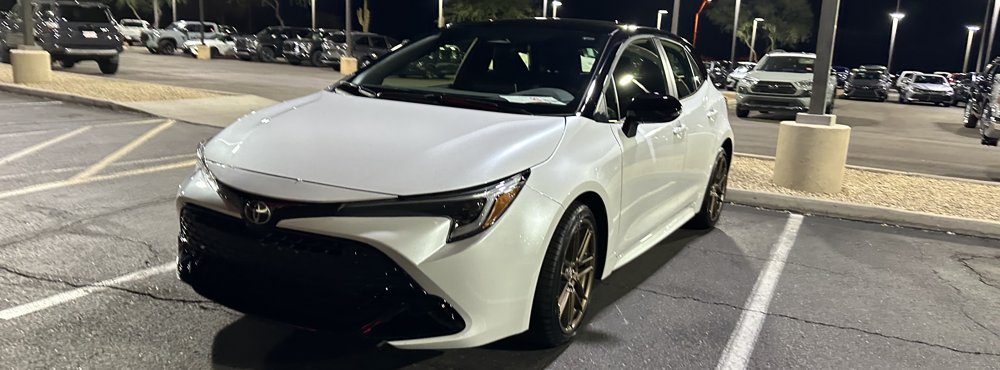
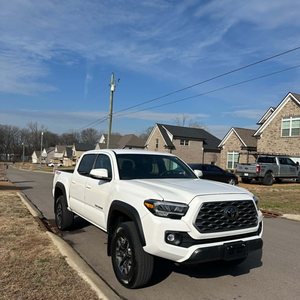
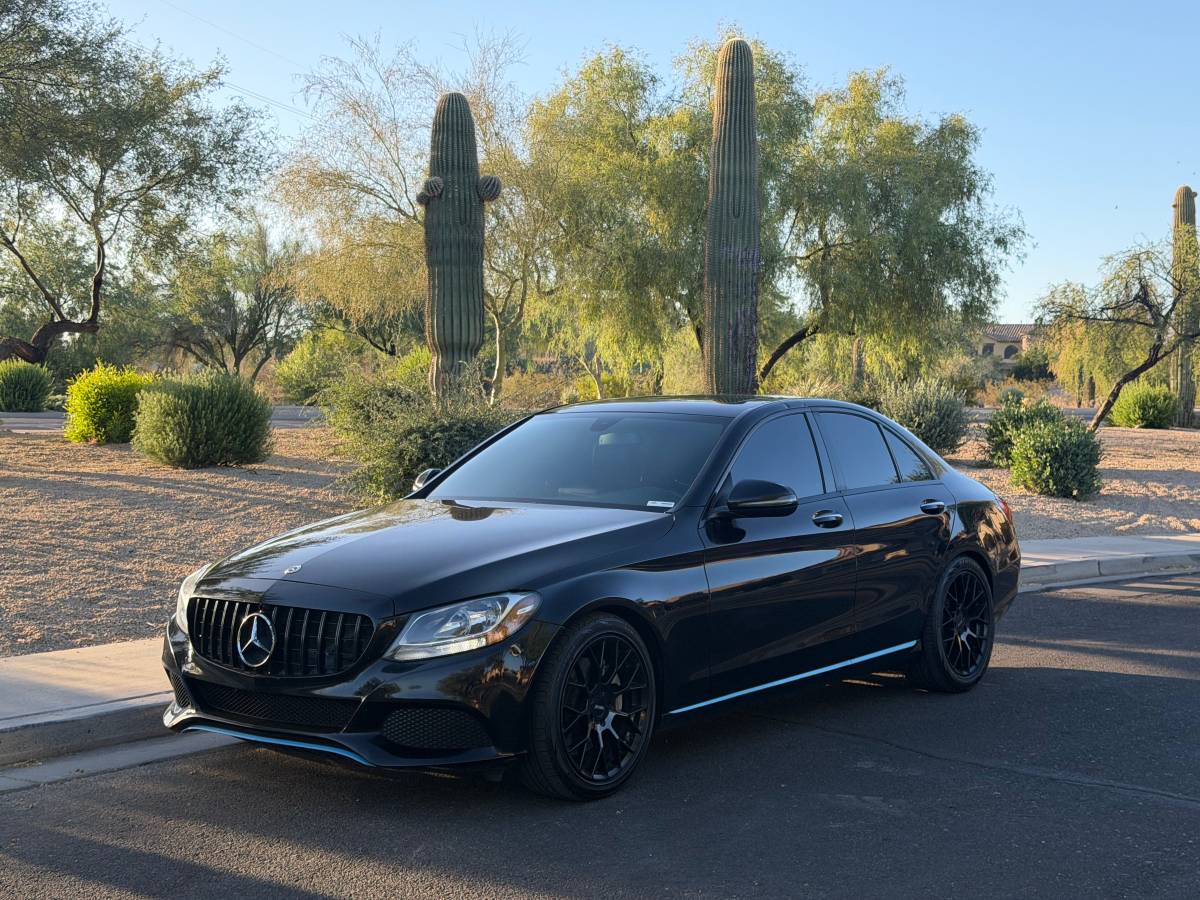
Auto Finance Strategy Guide Hero
d/dr [ P · r(1+r)ⁿ ] (1+r)ⁿ - 1 Σ n t=1 P · r(1+r)ⁿ (1+r)ⁿ - 1 lim r→0 P · r · (1+r)ⁿ (1+r)ⁿ - 1

Auto Finance Strategy Guide

Most people view auto financing as just another cost — the price of admission for an overpriced vehicle in modern America. In reality, financing is a tool. Applied correctly, it can open doors to vehicles that would otherwise be out of reach. Applied carelessly, it carries consequences that can follow a buyer for years.

We've created the following guide to shed light on the intricacies of auto finance — and help you apply them with the bigger picture in mind.

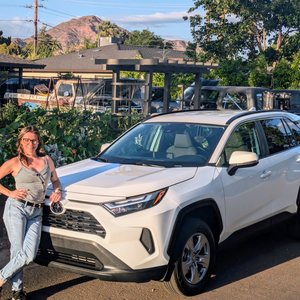
Toyota RAV4 XSE — Scottsdale, Phoenix, Arizona
Start Here

Identify Your Financial Position

Before the question of which car comes a more important one: What is my current financial situation?

Financial position largely boils down to three areas:

  • Available funds — what can be put down, and what can comfortably be parted with. A larger down payment lowers everything downstream.
  • Credit score — determines what loans you qualify for and the rate the lender will charge. Below a certain threshold, financing may not be possible without a cosigner. (Preview the rates your tier can expect with the Interest Rate Estimator.)
  • Capacity to pay off the loan — this centers on your monthly income. Whether you work full-time, draw from a trust, or receive passive income, you have to account for what you can comfortably afford each month.

Two different buyers both want a $500/month payment. However, they should be looking at very different vehicles.

Buyer A
Down
$10,000
Credit
800
Income
$138,000
Buyer B
Down
$0
Credit
620
Income
$35,000

A buyer needs $50,000 for a Honda Pilot. He can pay cash — or finance at 2.9% and leave that money invested at 6% over the 72-month term.

Pays Cash
Up front
$50,000
Interest paid
$0
Interest earned in the market
$0
Finances at 2.9%
Stays invested
$50,000
Interest paid
$4,540
Interest earned in the market
$20,900
≈ $16,400 ahead
The interest his money earns in the market, minus the interest he pays on the loan.

Determine Your Method of Payment

There are three ways to fund a vehicle, and the right one depends entirely on your situation and what you're optimizing for:

  • Cash — the simplest route, and interest-free. But simple isn't always smartest: paying cash only makes sense if that money isn't worth more somewhere else.
  • Finance — your savings stay intact and working, and you're able to acquire a vehicle you might not have been able to purchase outright. For buyers with reliable income, this is often the preferred avenue.
  • Lease — a specially structured loan with a lower monthly payment and smaller down payment than conventional financing, though often costlier in the long run. Useful for buyers who want a lower payment without putting significant money down.

Solve for the Unknown

Every auto loan comes down to four variables — amount financed, interest rate, term, and monthly payment — locked together in a single equation. Know any three, and the fourth is already determined.

The amount financed is the car's price after tax, fees, and equity. Most buyers already know their rate and term — which leaves the price and the payment. Solve for whichever one you're missing.

Start from a payment you can carry and find your price range, or start from a price and find the payment. The method never changes: know three, solve for the fourth.

Zach is interested in buying a preowned Tundra. He's trying to figure out what price range he should be looking for to have a monthly payment of no more than $780/month — at 7.6% over 72 months. How can he figure this out?

X + finance charges 72 months = $780/mo
X = amount financed  ·  7.6% APR
Do the math
$45,000
The amount financed works out to $45,000 — so Zach should shop for trucks at that price or less, out the door.

The same $60,000 vehicle, financed two different ways.

72 mo · 6.9%
Monthly payment
$1,020
Total cost
$73,440
48 mo · 4.1%
Monthly payment
$1,357
Total cost
$65,140
≈ $8,300 saved
The shorter term runs about $337 more a month — and saves roughly $8,300 on the very same car.

Consider the Overall Cost

Price, interest rate, and monthly payment all matter. But the figure most often overlooked is arguably the most important: the overall cost — the price of the vehicle plus tax, fees, and total finance charges.

Before you sign, consider the overall cost of the loan. Improve its economics, and you may save yourself thousands.

We're car guys… and finance guys.

Our team's greatest passion is getting to increase our clients' buying power — and in no other part of the car-buying process is our expertise more needed than in figuring out the financing. We didn't learn this stuff overnight; it's come from years of working deals on both sides of the table.

So whatever questions you have about financing your next vehicle, you don't have to figure them out alone. We're ready to put that knowledge to work for you today.

Book a Call
Lydon Auto Brokers

Proudly serving buyers and sellers throughout the Southwest since 2026.

© 2026 Lydon Auto Brokers. All rights reserved.